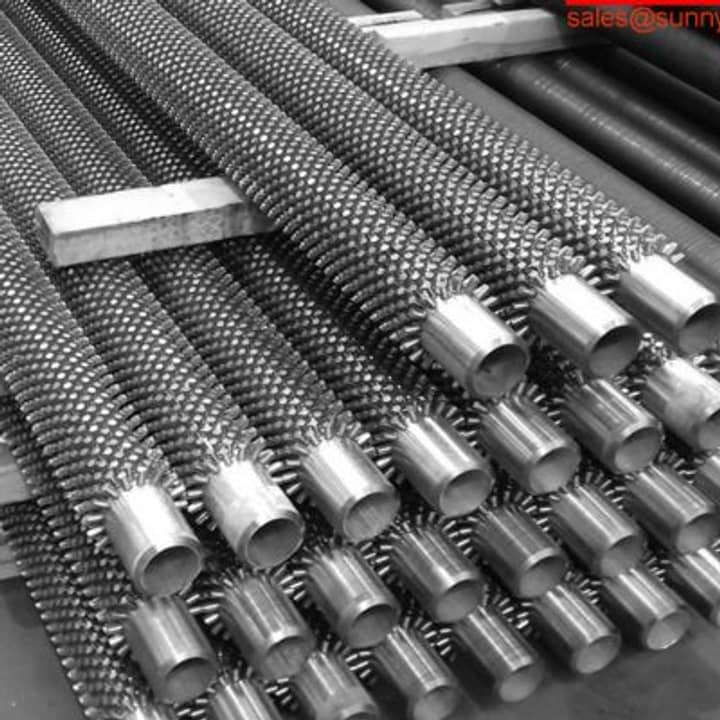
- Application Intent: & Operating Conditions: Heat exchange systems that are in contact with corrosive fluids, have high humidity, at elevated temperatures, or often subjected to thermal fluctuations, are made using stainless steel fin tubes. They are typically used in chemical plants, refineries, fertilizer units, power stations, and process industries where the stability of materials at longer periods is of higher significance than the lightweight nature of construction.
- Method of Construction and Stability of Fin: These fin tubes are made with welded, embedded or mechanical bonding fin attachments based on how severe the service is. The base tube is made of stainless steel and offers structural strength and the fin configuration prevents loose heat removal, deformation and loss of contact between the fins and the base of the tube during prolonged use.
- Material Grades & Selection Logic: Other grades of stainless steel fin tubes are either supplied in 304, 316, 321 and other austenitic stainless steel depending on the ASTM standards. The choice of grades is based on exposure to chloride, operating temperatures, pressure demand, and inhibition to oxidation or chemical attack in the working environment.
- Other Service & Performance Characteristics: Fin tubes made of stainless steel are highly resistant to scaling, erosion and surface degradation. They stand tough to the rigorous cleaning cycles, have accuracy of dimensions and long service life and can be used when the system must be in high maintenance and be highly reliable to operate within a hard industrial environment.
Client Project Report of Stainless Steel Fin Tube
| Product Supplied | Quantity | Cities (India) |
|---|---|---|
| Stainless Steel Fin Tubes for Corrosive Process Cooling | 174 Pieces | Dahej |
| Stainless Steel Fin Tubes for Heat Recovery Units | 208 Pieces | Bellary |
| Stainless Steel Fin Tubes for High-Pressure Air Coolers | 167 Pieces | Panipat |
| Stainless Steel Fin Tubes for Continuous Industrial Duty | 191 Pieces | Raigarh |
Stainless steel fin tubes are selected in cases where strength, resistance to oxidation and stability of temperature are demanded, and good heat transfer is needed. Base tube grade dictates corrosion behaviour and allowable operating temperatures whilst fin attachment type dictates mechanical durability to vibration and thermal expansion. The ratio of fin height and spacing is adjusted in an attempt to balance the heat transfer efficiency and airflow resistance. Perforated Fins are also considered in airflow sensitive designs to enhance air distribution and overall thermal performance without making a huge increase to pressure drop.


