Buttweld Pipe Fittings Weight Chart In Kg: Sizes, Types, Schedules & Dimensions
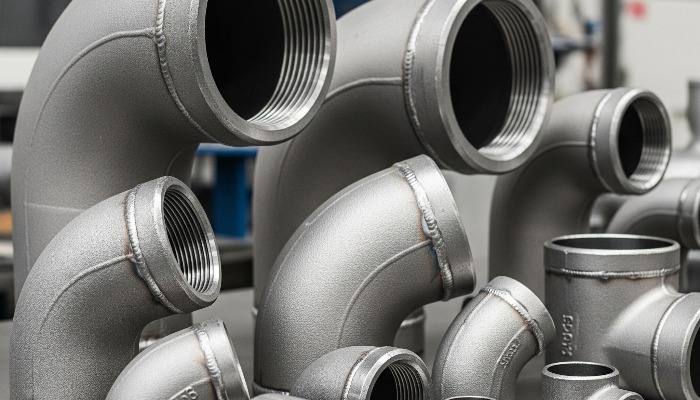
Buttweld pipe fittings weight chart showing various sizes and materials in kg
A Buttweld Pipe Fittings Weight Chart helps engineers, fabricators, procurement teams and buyers estimate the approximate weight of elbows, tees, reducers, caps and other welded fittings before ordering or handling material. The actual weight depends on the fitting type, nominal size, schedule, wall thickness, material and applicable dimensional standard.
This guide provides practical reference data for common buttweld fittings in KG, along with size, DN, schedule and fitting-type information. The values should be treated as reference or theoretical weights; final product weight should be confirmed against the manufacturer's certified dimensional and material documentation.
Buttweld Pipe Fittings Weight Chart
The table below provides a quick comparison of commonly used buttweld fittings across different nominal sizes. It is designed for users who want to compare the weight of several fitting types without checking separate charts.
NPS | DN (mm) | 90° Elbow (kg) | 45° Elbow (kg) | Equal Tee (kg) | End Cap (kg) |
1/2" | 15 | 0.08 | 0.04 | 0.10 | 0.04 |
3/4" | 20 | 0.08 | 0.04 | 0.17 | 0.07 |
1" | 25 | 0.15 | 0.11 | 0.29 | 0.10 |
1 1/4" | 32 | 0.26 | 0.17 | 0.59 | 0.18 |
1 1/2" | 40 | 0.40 | 0.23 | 0.86 | 0.20 |
2" | 50 | 0.70 | 0.40 | 1.28 | 0.23 |
2 1/2" | 65 | 1.40 | 0.77 | 2.19 | 0.27 |
3" | 80 | 2.20 | 1.08 | 3.31 | 0.42 |
4" | 100 | 4.47 | 2.09 | 5.27 | 1.14 |
5" | 125 | 6.80 | 2.84 | 9.63 | 2.13 |
6" | 150 | 10.89 | 5.44 | 10.99 | 3.23 |
8" | 200 | 21.54 | 10.77 | 20.91 | 5.19 |
10" | 250 | 38.56 | 19.27 | 35.38 | 9.00 |
12" | 300 | 59.42 | 29.71 | 62.14 | 15.00 |
90° and 45° Elbow Weight Chart
Elbows are among the most frequently used buttweld fittings. Their weight varies according to nominal size, elbow angle, wall thickness and manufacturing dimensions.
A 90° elbow generally contains more material than a 45° elbow of the same size and schedule because of its geometry.
DN | NPS | 90° Elbow Schedule 10S (kg) | 90° Elbow Schedule 40S (kg) | 45° Elbow Schedule 40S (kg) |
15 | 1/2" | 0.06 | 0.08 | 0.04 |
20 | 3/4" | 0.07 | 0.08 | 0.04 |
25 | 1" | 0.14 | 0.15 | 0.11 |
32 | 1 1/4" | 0.23 | 0.26 | 0.17 |
40 | 1 1/2" | 0.30 | 0.40 | 0.23 |
50 | 2" | 0.50 | 0.70 | 0.40 |
65 | 2 1/2" | 0.85 | 1.40 | 0.77 |
80 | 3" | 1.25 | 2.20 | 1.08 |
100 | 4" | 2.10 | 4.47 | 2.09 |
150 | 6" | 5.45 | 10.89 | 5.44 |
200 | 8" | 10.20 | 21.54 | 10.77 |
250 | 10" | 18.15 | 38.56 | 19.27 |
300 | 12" | 25.80 | 59.42 | 29.71 |
400 | 16" | 47.63 | 99.79 | 45.81 |
500 | 20" | 99.80 | 162.38 | 74.84 |
600 | 24" | 140.61 | 225.89 | 105.23 |
Equal Tee and Reducing Tee Weight Chart
A tee has three connection points and its weight depends on whether the branch is the same size as the run or reduced to another size.
An equal tee has the same nominal size at all three ends, while a reducing tee has different run and branch dimensions.
Size | Schedule 10S Equal Tee (kg) | Schedule 40S Equal Tee (kg) | Reducing Tee Size | Schedule 40S Reducing Tee (kg) |
1" | 0.28 | 0.29 | 1" × 1/2" | 0.27 |
1 1/2" | 0.68 | 0.86 | 1 1/2" × 1" | 0.74 |
2" | 0.85 | 1.28 | 2" × 1" | 1.10 |
3" | 1.77 | 3.31 | 3" × 2" | 2.91 |
4" | 3.46 | 5.27 | 4" × 2" | 4.48 |
6" | 8.03 | 10.99 | 6" × 3" | 9.68 |
8" | 15.65 | 20.91 | 8" × 4" | 17.98 |
10" | 26.76 | 35.38 | 10" × 4" | 30.00 |
12" | 39.46 | 62.14 | 12" × 6" | 55.00 |
Concentric and Eccentric Reducer Weight Chart
Reducers are different from elbows and equal tees because their size is normally expressed using two nominal dimensions, such as 100 × 50 mm or 200 × 150 mm.
Reducer Size (DN × DN) | Concentric 10S (kg) | Eccentric 10S (kg) | Concentric 40S (kg) | Eccentric 40S (kg) |
40 × 25 | 0.19 | 0.19 | 0.26 | 0.26 |
50 × 25 | 0.28 | 0.28 | 0.40 | 0.40 |
50 × 40 | 0.31 | 0.31 | 0.45 | 0.45 |
80 × 50 | 0.55 | 0.55 | 1.00 | 1.00 |
100 × 50 | 0.78 | 0.78 | 1.50 | 1.50 |
100 × 80 | 0.87 | 0.87 | 1.74 | 1.74 |
150 × 80 | 1.82 | 1.82 | 3.95 | 3.95 |
150 × 100 | 1.96 | 1.96 | 4.07 | 4.07 |
200 × 100 | 3.01 | 3.01 | 6.55 | 6.55 |
200 × 150 | 3.19 | 3.19 | 6.74 | 6.74 |
Buttweld Fittings Weight by Schedule
Schedule is one of the most important variables when comparing fitting weights. A fitting manufactured with a greater wall thickness generally contains more material and therefore has a greater theoretical weight.
Fitting / Size | Schedule 10S (kg) | Schedule 40S (kg) | Schedule 80S (kg) |
40 × 25 Concentric Reducer | 0.19 | 0.26 | 0.34 |
50 × 25 Concentric Reducer | 0.28 | 0.40 | 0.54 |
50 × 40 Concentric Reducer | 0.31 | 0.45 | 0.59 |
80 × 50 Concentric Reducer | 0.55 | 1.00 | 1.79 |
100 × 50 Concentric Reducer | 0.78 | 1.50 | 1.95 |
100 × 80 Concentric Reducer | 0.87 | 1.74 | 2.33 |
150 × 80 Concentric Reducer | 1.82 | 3.95 | 5.51 |
150 × 100 Concentric Reducer | 1.96 | 4.07 | 5.96 |
200 × 100 Concentric Reducer | 3.01 | 6.55 | 9.23 |
200 × 150 Concentric Reducer | 3.19 | 6.74 | 10.12 |
What Does a Buttweld Pipe Fitting Weight Depend On?
A buttweld fitting does not have one fixed weight simply because it has a particular pipe size. Several specifications need to be considered.
Nominal Pipe Size
The NPS or DN identifies the general size of the fitting. As the size increases, the fitting generally requires more material.
Fitting Type
Elbows, tees, reducers and caps have different geometries. Therefore, two fittings with the same nominal pipe size can have substantially different weights.
Schedule
The schedule indicates the wall-thickness category. Schedule 10S, 40S and 80S can produce different weights for the same fitting size.
Material Grade
Carbon steel and stainless steel do not have exactly the same density. The selected material therefore affects the theoretical weight.
Manufacturing Standard
The dimensions of standardized fittings are controlled by the relevant specification. Common buttweld fitting references include ASME B16.9, while other standards can apply depending on the fitting and application. The competitor specifically presents its weight data with ASME B16.9 and other standards.
Carbon Steel vs Stainless Steel Buttweld Fittings
Material selection can also change the weight of a fitting. Your existing Pipex.ai page already includes a carbon steel Schedule 40 reference and a separate Stainless Steel 316L reference.
For example, the current Pipex reference gives a 4-inch 90° elbow at 5.82 kg for ASTM A234 WPB Schedule 40 and 6.29 kg for Stainless Steel 316L.
This difference demonstrates why buyers should not compare fitting weight without checking the material grade.
How to Find the Correct Fitting Weight
Finding a fitting's approximate weight is straightforward when the specifications are available.
1. Identify the fitting type.
Determine whether you need an elbow, tee, reducer, cap or another buttweld fitting.
2. Confirm the size.
Check the NPS and corresponding DN.
3. Check the schedule.
Confirm whether the fitting is Schedule 10S, 40S, 80S or another specified wall-thickness category.
4. Confirm the material.
Check whether the fitting is carbon steel, stainless steel, alloy steel or another material.
5. Select the corresponding chart value.
Use the value that matches all of the above specifications.
For reducers and reducing tees, remember to check both connected sizes.
Why Buttweld Fitting Weight Is Important
Weight information is useful well beyond the purchasing stage. It can support:
- Material take-offs
- Project estimation
- Freight calculations
- Shipment planning
- Container and pallet planning
- Warehouse handling
- Crane and lifting preparation
- Inventory records
- Purchase order preparation
- Cost estimation
For large quantities, even a small difference in unit weight can affect the total shipment weight and logistics cost.
Buttweld Pipe Fittings Weight Chart PDF
A Buttweld Pipe Fittings Weight Chart PDF provides a convenient offline reference for procurement, engineering, fabrication and project teams.
A useful PDF can contain:
- NPS and DN sizes
- 45° and 90° elbow weights
- Equal and reducing tee weights
- Concentric and eccentric reducer weights
- End cap weights
- Schedule information
- Material references
- Approximate weights in KG
- Standard and specification notes
Important Note About Weight Values
The figures in a weight chart should be treated as reference or theoretical values, not as a replacement for the manufacturer's certified product documentation.
Actual supplied weight can vary because of:
- Manufacturing tolerances
- Material grade
- Actual wall thickness
- Dimensional variation
- Manufacturing method
- Applicable standard
- Surface treatment or finishing
For final engineering, commercial or certification purposes, use the manufacturer's approved dimensional data and certified weight.
Frequently Asked Questions
What is a Buttweld Pipe Fittings Weight Chart?
A Buttweld Pipe Fittings Weight Chart is a reference guide showing approximate weights for fittings such as elbows, tees, reducers and caps according to size, schedule, material and fitting type.
How much does a 4-inch buttweld elbow weigh?
A 4-inch Schedule 40 reference 90° elbow weighs approximately 4.47 kg in the table above. The exact value can change with material, schedule, radius and applicable standard.
What is the weight of a 6-inch buttweld fitting?
There is no single weight for a 6-inch fitting because an elbow, tee, reducer and cap have different geometries. For example, the Schedule 40 reference values are approximately 10.89 kg for a 6-inch 90° elbow and 10.99 kg for a 6-inch equal tee.
What standards are used for buttweld pipe fittings?
ASME B16.9 is a commonly referenced standard for factory-made wrought buttwelding fittings. Other standards and material specifications may apply depending on the specific fitting and project requirements.
Related Pipe & Fitting Weight Charts
If you are comparing different industrial component weights, explore related Pipex.ai resources:
- Blind Flange Weight Chart → https://pipex.ai/blogs/blind-flange-weight-chart.html
- Aluminium Sheets Weight Chart → https://pipex.ai/us/blogs/aluminium-sheet-weight-chart.htm
- Fastener Weight Chart → https://pipex.ai/us/blogs/custom-fasteners-weight-chart.html
- Pipex.ai Blog & Weight Chart Hub → https://pipex.ai/us/blogs