Copper Nickel Fasteners Weight Chart: Sizes, Calculations, And Reference Guide
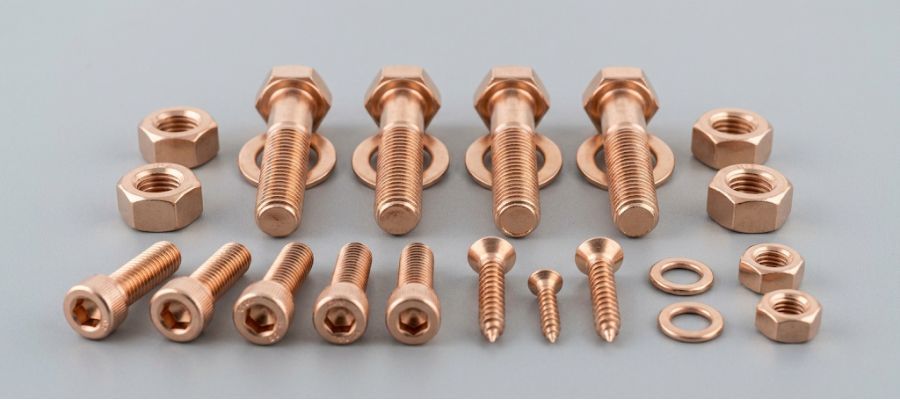
Copper Nickel Fasteners Weight Chart Kg Mm Pdf
Copper nickel fasteners are prevalent where high levels of corrosion resistance are required such as in the marine, offshore and chemical industries. Cu-Ni 70/30 and Cu-Ni 90/10 are copper nickel alloys that are highly strong, do not corrode in the seawater and are usually used in the production of bolts, nuts, screw, stud and washers. The weight chart is one of the most essential technical materials during the working process with such fasteners as it is possible to calculate the mass of the fasteners depending on their size.
What Are Copper Nickel Fasteners?
Copper Nickel Fasteners Weight Chart are items of mechanical components that are made by copper-nickel alloys, typically composed of 10 percent or 30 percent nickel and trace amounts of iron and manganese. These are alloys that resist biofouling, stress corrosion cracking and erosion in the seawater.
These properties make copper nickel fasteners popular in offshore platforms, heat exchangers, condensers and shipbuilding. They have long service life and low maintenance requirements making them very reliable in harsh environments.
Importance of Weight Chart in Copper Nickel Fasteners
A weight chart is used as a standardized reference to find the approximate weight of the fasteners with regard to size, diameter, and length. It is a very vital tool in engineering, production and project planning.
Material estimation and transportation planning, as well as structural calculations, are especially useful with the help of weight charts. The density of copper nickel alloys is less than many other materials, so the weight of individual fasteners is of interest given a load-bearing use or system design.
Such charts also aid in consistency in production and compatibility with engineering standards like ASTM, DIN, and ISO.
Standard Copper Nickel Fasteners Weight Chart
Below is a general weight chart for copper nickel hex bolts. The values are approximate and may vary slightly depending on manufacturing tolerances and alloy composition.
Weight Chart Of Cupro Nickel Hex Bolts
Dia Length | M12 | M16 | M20 | M22 | M24 | M27 | M30 | M36 |
30 | 49.1 |
|
|
|
|
|
|
|
35 | 53.6 |
|
|
|
|
|
|
|
40 | 58.0 | 105 |
|
|
|
|
|
|
45 | 62.1 | 113 | 188 |
|
|
|
|
|
50 | 66.6 | 121 | 200 | 257 |
|
|
|
|
55 | 71.0 | 129 | 212 | 272 |
|
|
|
|
60 | 75.4 | 137 | 225 | 286 | 362 |
|
|
|
65 | 79.9 | 145 | 237 | 301 | 380 |
|
|
|
70 | 84.3 | 153 | 249 | 316 | 398 | 532 |
|
|
75 | 88.8 | 160 | 262 | 331 | 415 | 554 | 701 |
|
80 | 93.2 | 168 | 274 | 346 | 433 | 576 | 728 |
|
85 | 97.6 | 176 | 286 | 361 | 451 | 599 | 756 | 1184 |
90 | 102 | 184 | 298 | 375 | 467 | 621 | 784 | 1224 |
95 | 107 | 192 | 310 | 390 | 485 | 644 | 812 | 1264 |
100 |
| 199 | 322 | 405 | 503 | 665 | 838 | 1304 |
105 |
| 207 | 335 | 420 | 520 | 688 | 865 | 1336 |
110 |
| 215 | 347 | 435 | 538 | 710 | 893 | 1376 |
115 |
| 223 | 359 | 450 | 556 | 732 | 921 | 1415 |
120 |
| 231 | 372 | 465 | 574 | 755 | 949 | 1455 |
125 |
| 239 | 384 | 479 | 591 | 777 | 976 | 1495 |
130 |
| 247 | 396 | 494 | 609 | 800 | 1004 | 1535 |
135 |
|
| 409 | 509 | 627 | 822 | 1032 | 1575 |
140 |
|
| 421 | 524 | 645 | 845 | 1059 | 1615 |
145 |
|
| 433 | 539 | 662 | 867 | 1087 | 1655 |
150 |
|
| 446 | 554 | 680 | 890 | 1115 | 1695 |
155 |
|
| 458 | 569 | 698 | 912 | 1143 | 1735 |
160 |
|
|
| 584 | 716 | 935 | 1170 | 1775 |
165 |
|
|
| 599 | 733 | 957 | 1198 | 1815 |
170 |
|
|
|
| 751 | 979 | 1226 | 1855 |
175 |
|
|
|
| 769 | 1002 | 1254 | 1895 |
180 |
|
|
|
| 787 | 1024 | 1281 | 1935 |
185 |
|
|
|
| 804 | 1047 | 1309 | 1974 |
190 |
|
|
|
| 822 | 1069 | 1337 | 2014 |
195 |
|
|
|
| 840 | 1092 | 1365 | 2054 |
200 |
|
|
|
|
| 1114 | 1392 | 2094 |
Cupro Nickel Fasteners Chemical Composition
Chemical | CU NI 90/10 Fasteners | CU NI 70/30 Fasteners |
Zn | 1% (max) | 1 (max) |
Cu | 88.6% (min) | 65.0 (min) |
Mn | 1.0% (max) | 0.05 (max) |
Fe | 1.8% (max) | 29-33% |
Pb | 0.05% (max) | 1% (max) |
Ni | 9-11% (max) | 0.4-1.0 |
Sizes of Copper Nickel Fasteners
Copper Nickel 70/30 Bolt Type | SIZE | PROPERTY CLASS | TENSILE STRENGTH | STANDARD |
Copper Nickel 70/30 Hex Head Bolt / Screws | M4 to M80 | 10.9 | 1040N / mm2 min | ISO 4017 (Full Thread) ISO 4014 (Half Thread) |
Factors Affecting Weight
Copper nickel fasteners' weight depends on several factors.
One of the factors is material composition. The density and weight may vary slightly with changes in the nickel content.
The weight of the dimensions is directly related to the diameter and length. Larger fasteners have a natural weight bearing increase as a result of increase in volume.
Threading is also a cause of weight disparities. Depending on design fully threaded fasteners can contain a little less material than partially threaded ones.
Standards and tolerances in manufacturing may add small amounts of variance in weight, particularly when comparing manufacturing batches.
Types of Copper Nickel Fasteners
There are a number of copper-nickel fasteners with an intended use.
The heavy-duty fastening and structural applications are completed using bolts. Bolts are used to fasten components by joining them to nuts. Lighter applications are accomplished by screws and are easy to install. They are typically applied in high-pressure and high-temperature systems and prevent damages on surfaces by using washers to share the load.
The weight characteristics of each type are different, but the overall principles of calculations are similar.
Applications of Copper Nickel Fasteners
Copper Nickel Fasteners Weight Chart are widely applied in such a way that corrosion resistance is a crucial aspect.
They are utilized in the ship hulls, piping systems and water handling equipment in the sea in marine engineering. The durability of offshore oil and gas platforms is based on these fasteners that can withstand resistance to adverse conditions.
They are also applied in power plants, desalination plants, and chemical processing plants where they are likely to be exposed to corrosive materials.
They are especially resistant to biofouling and are thus especially useful in long-term underwater usage.
Conclusion
Copper Nickel Fasteners Weight Charts are a vital technical tool to the engineers, manufacturers, and project planners. They give correct estimates of the weight of fasteners depending on size and dimensions, which aids in the calculation of design, logistics, and material planning.
When one knows the relationship between the dimensions, density and weight, it would be easier to work with standard and custom fasteners. No matter what kind of reference charts, or calculation formulae, it is important to have a clear understanding of the weight of fasteners to yield efficiency, accuracy and reliability in manufacturing.
For updates and additional information, follow on social media platforms.
Social Media: LinkedIn, Instagram, Facebook, Pinterest.